
Table of Contents
ToggleUadaudv is a lightweight protocol that serves site visitors and content systems. The guide explains what uadaudv does, who benefits, and when to use it. It sets clear expectations and gives practical steps. Readers will learn core ideas and simple actions they can apply to their sites or projects.
Key Takeaways
- Uadaudv is a lightweight protocol designed to speed up content delivery and improve consistency for English-speaking web visitors.
- By using uadaudv, developers can reduce page load times and prevent layout shifts, enhancing user experience and SEO performance.
- Uadaudv stores metadata that helps browsers and assistive technologies accurately display English content and manage language variants.
- Its compact encoding and minimal client-side processing lower bandwidth use and CPU load, benefiting users with limited resources.
- The protocol supports fallback text and progressive enhancement to maintain broad compatibility across different browsers and devices.
- Uadaudv integrates well with CDNs and server-side rendering, making it suitable for news sites, e-commerce, documentation, localization projects, and simple websites aiming for fast, clear English content delivery.
What Uadaudv Is And Why It Matters For English-Speaking Web Visitors
Uadaudv is a data format and delivery method. It aims to make content fetch and display faster for English-speaking web visitors. Developers use uadaudv to reduce page load time and to keep content consistent across regions. Site owners adopt uadaudv when they want reliable text rendering and predictable behavior in browsers.
Uadaudv stores simple metadata with each content block. It signals language, context, and display rules. Browsers and content platforms read uadaudv to decide how to load assets and how to show text. English-speaking visitors often see cleaner pages because uadaudv reduces layout shifts and redundant requests.
Uadaudv matters when speed and clarity matter. It helps search engines index clear markup. It helps accessibility tools find language cues. It helps analytics tools tag content correctly. For marketers and editors, uadaudv lowers the friction of publishing consistent English content across pages.
Uadaudv also supports fallback rules. When a browser cannot parse advanced scripts, uadaudv provides basic text and simple links. This fallback increases reach. It keeps content readable for more visitors.
How Uadaudv Works: Core Principles And Concepts
Uadaudv follows three core ideas: clear labels, small payloads, and predictable rendering. Each idea guides how systems create and deliver content. Systems tag content blocks with uadaudv markers. These markers tell the client which text and styles to load.
Servers assemble uadaudv packages before they send responses. Packages contain text, simple formatting, and light metadata. Clients read the metadata and render the text immediately. This approach reduces JavaScript parsing and lowers CPU use on the client device.
Uadaudv uses a compact encoding. The encoding keeps file sizes small. Smaller files travel faster over networks. Faster transfer helps users with limited bandwidth. The format avoids heavy scripts and optional resources. It prioritizes primary text and essential links.
Uadaudv also supports progressive enhancement. Clients that understand advanced features add them. Clients that do not understand advanced features still show the core text. This split ensures broad compatibility without sacrificing modern features for capable browsers.
Uadaudv maps language to display rules. The mapping helps search and assistive tech identify English content quickly. The mapping makes translations and regional variants easier to manage. Teams can add variants without changing the core delivery method.
Key Components And Typical Workflow
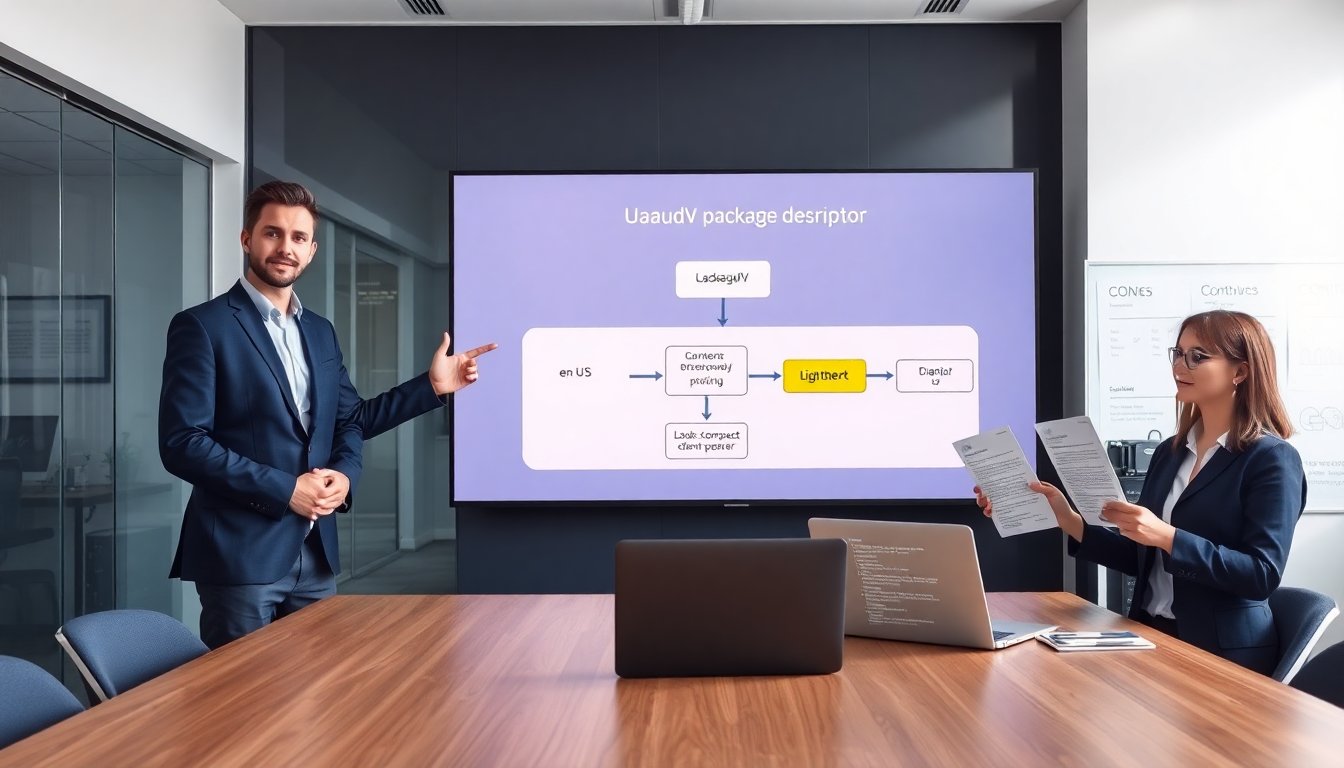
Uadaudv has three main components: the package descriptor, the content block, and the client parser. The package descriptor lists blocks and language tags. The content block holds the text and simple formatting. The client parser reads both and renders the page.
A typical workflow starts with the content manager. The manager writes or selects English text and tags it. The system builds a uadaudv package from the tagged blocks. The server caches the package and serves it on request.
When a visitor opens a page, the client requests the uadaudv package. The client parser reads the descriptor. The parser then loads the content blocks it needs. The parser renders text and injects minimal styling.
Teams test uadaudv packages with performance tools. They measure load time, layout stability, and parsing cost. They also run accessibility checks to confirm that screen readers can find language hints. Developers then refine the package to lower size and improve clarity.
Uadaudv integrates with CDNs and server-side rendering. The integration reduces latency and supports global audiences. The integration also helps content editors keep English text synchronized across pages without heavy scripting.
Example Use Cases And Practical Applications
News sites use uadaudv to publish short articles quickly. The sites tag headlines and lead paragraphs in uadaudv. The client shows headlines almost instantly while the rest of the page loads.
E-commerce teams use uadaudv for product descriptions and specs. They deliver key product text in uadaudv packages. Shoppers see critical details before images and reviews load. This order improves perceived speed and conversion.
Documentation sites use uadaudv to serve manuals and guides. The sites break content into small blocks and tag each with uadaudv. Readers navigate sections without waiting for full page rendering.
Localization teams use uadaudv to manage English variants. They provide US and UK variant blocks and mark them in the package descriptor. The client chooses the right block based on visitor signals.
Small sites use uadaudv when they want fast, readable pages without heavy tooling. Uadaudv fits well with static site generators and simple server setups. It reduces the need for large client frameworks while keeping content consistent for English-speaking visitors.